Search results
-
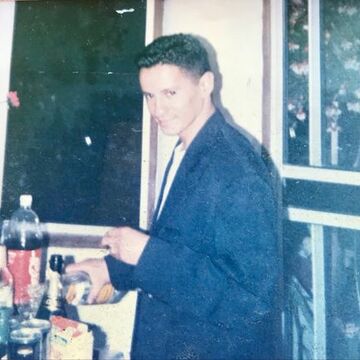 In Brighton on World AIDS Day, many huddle together at the vigil in New Steine Gardens to ‘hear the voices of dead friends.’ Two hundred souls claimed by the virus are remembered as their names are read, one after another. When I hear my friend Andrea’s name, memories flicker like the candle cradled in my hand, but what settles in my mind is the smiling face of the bright-eyed Brazilian florist who made me laugh every day. For me, it’s important that my thought lingers on his life, however short, before the disease choked it from his lungs on an AIDS ward. I remember many people whose names are read but there are fewer faces I recognise in the crowd with each passing year. Brighton has always been a transient place, an oasis many use to find their queer identity before moving on. Sometimes I worry I might be the only person left in the crowd of candles who remembers Andrea, and it saddens me to think all that might eventually remain of him and others are names forever bound to the virus and death. From the late 1980s Brighton was hit hard by AIDS, and due to the number of victims and their age, many likened the experience to being in a war. When I opened the Evening Argus or walked up St. James’s Street and saw GAY – GOT AIDS YET sprayed on a wall, it definitely felt like we were under attack and losing. But as writer and activist Neil Bartlett once reminded me, using war as a metaphor is dangerous because it suggests an end. World War One stopped at 11 o’clock on the 11 November 1918 with an armistice. HIV, AIDS and the stigma that surrounds it still continues. In 1989 I trained as a volunteer at the Sussex AIDS Centre and Helpline, because I wanted to help, but also because I wanted to learn about the disease and stay alive. The camaraderie fostered by the centre birthed many friendships that last to this day, but inevitably I lost quite a few friends along the way too. Despite the wounds the disease left behind, little seems to remain to a story, just ghosts and a few buildings turned into flats. I believe our history needs to be recorded and held close because it has shaped us and helps inform our identities going forward. I created the Brighton AIDS Memorial on Instagram as a starting point to this collection after being directly inspired by the AIDS Memorial which has become a global phenomenon with 186,000 followers. The stories that arrive from across the world never cease to move and surprise, and one day it struck me that Brighton needed its own space for remembrance so that local names can be re-embroidered with their essence and local history pieced together. Our remembrance needs to acknowledge the horror, but also celebrate the lost lives and provide a cathartic release. I’ve already discovered much needing careful preservation for future generation, and this work must continue. My belief is that the Queer Heritage South archive site will provide the safe home these stories need so they don’t disappear. The collection will also showcase the queer heroes and trailblazers, the organisations, and bring together all the photos, writing and ephemera in one place. So, take a look in those old shoe boxes under the bed, or the scrapbooks and photo albums in a cupboard and help us build this collection. Or if you have a story to tell or someone to remember please get in touch – brightonaidsmemorial@gmail.com
 -
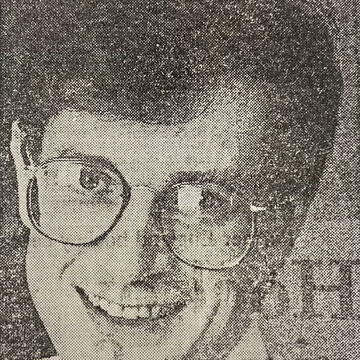 Dr Gordon McPhail was a clinical medical doctor at the Claude Nichol Clinic, when it was located in the Royal York building on the Old Steine - now a YHA hostel. He looked after patients with HIV and AIDS at the clinic between 1988 and 1990 and was quoted as saying “I jumped in at the deep end and I’m still learning about AIDS, as we all are. AIDS was thrust upon us, and we have had to learn very quickly, but I am a far better doctor now than when I started.” Dr McPhail was also a trustee of the Sussex AIDS Trust, and in 1989 he helped launch a £2.5 million appeal to build a hospice on a disused hospital site in Bevendean with the motto ‘living with AIDS, not dying with it.’ He believed the facility was vital to provide convalescent care for AIDS patients, and respite for the people looking after them. His dream was realized when the Sussex Beacon opened its doors in 1992. Gordon died of bronchial pneumonia, an AIDS related illness, at his Brighton home on 31 October 1991 aged 34. Colleagues described him as an excellent doctor and a very caring man. He was also a devout Quaker, and asked that friends and colleagues attend any service they chose after his death. A memorial meeting was held for him at the Friends Meeting House in Ship Street at 2.30pm on 10 November 1991.
 -
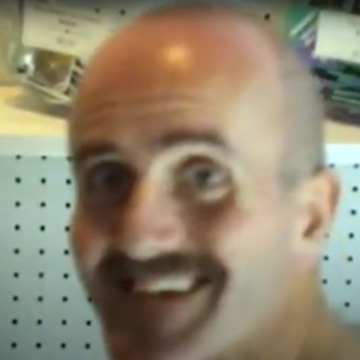 I first met Gary sometime in the mid 80’s. I’m not sure where but I think it was to do with Body Positive business. He and his partner Sebastian were also engaged with The London Lighthouse in some capacity. Sebastian was very handsome and a few years younger than Gary. One afternoon I met them outside the Ladbrook Grove tube station with Rusty their new little Jack Russell cross who was gorgeous. They asked me to hold him whilst they went to use a loo and when they came out, we had a coffee somewhere nearby. They told me that Sebastian was moving to Brighton, with Gary following as soon as he could. I met them both again in Woolworths on Oxford St the day before Sebastian was moving, but I never saw Sebastian again because he died before I moved to Brighton. Gary was not a run of the mill chauffeur. He worked as one of the top drivers for the most important chauffeur service in London Victoria. He drove everyone - heads of state, celebrated film stars, rock musicians and many other world-famous people who specifically asked for him time and time again. I think he must have had some kind of intelligence background due to the importance of the people he drove, but I can’t say for certain. He was also a great dancer and lovely human being. Gary and Sebastian bought a house in Kemp Street a few doors up from the artist Gary Sollars. They were both members of the newly formed LGBT Line Dance group which I also joined later. We became a very close-knit group of friends and danced our hearts out for a couple of years. Sadly, Gary went from HIV status to full blown AIDS so I started visiting almost every day to take Rusty out for a walk. When I came into the living room Rusty would jump all over me and I’d kiss and cuddle him for a few minutes before going over to kiss and hug Gary. We walked all over Brighton, and when Gary went into The Sussex Beacon, Rusty came to live with me. We were told that Gary only had a few weeks to live and wanted to return home to die. We all helped, taking turns to look after Gary and do all the cooking, shopping and cleaning. The whole house became alive with fabulous energy. We laughed, cried, ate together, slept overnight and read to Gary until the final week when he slipped in and out of consciousness. Gary told us he didn’t want his sister to have anything to do with his death or its aftermath, and he left a letter at the Sussex Beacon saying they were not to inform her. Unfortunately, the letter was not read until it was too late. She arrived the day before he died and was furious that we were all having such a wonderful time making Gary’s last days positive and bearable. Gary had one of the best deaths I have ever witnessed until she poked her nose in. We would not let her interfere, but she wouldn’t leave Gary’s house until after the funeral. There was one problem, Rusty. I said I could not take him so said she’d build another kennel outside for him next to her other dogs. This horrified me and all the others, so I quickly changed my mind and took Rusty home with me that evening. He lived for another 4 happy years, and I still have an oil painting of him above my desk.
 -
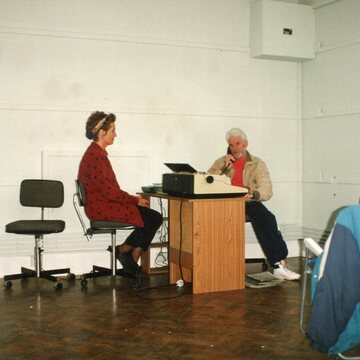 Our House Body Positive valued the services offered by Open Door which was open weekday daytimes, but it was felt there was a need for a peer led service operating at weekends. The very first meeting took place in January 1991 at a Hereford Court flat on Lavender Street, and for the first six months the group met in people’s homes where a Sunday lunch would be cooked by the host, supported by other members of the group. After six months we were able to use a social services family centre building (now demolished) in Ivory Place, off Morley Street for our Sunday lunches. This gave us use of a fully equipped commercial kitchen, and sufficient space to expand. The group was a varied mix of male, female, varied ethnicities, straight, gay, positive and untested supporters which allowed people of different backgrounds to get to know each other and to support one another. The management of the building would not allow us to use their plates, cups or cutlery, so we had our own which we took to and from the centre each Sunday. The larger space allowed us to have themed discussions or a speaker after lunch each week, and the room to invite a variety of complementary therapists to offer their services (something that I managed). As the group grew along with its ambitions, we realised that a more organised structure was needed, so one Sunday we held a group workshop to explore what this might entail alongside things like a constitution and named officers. Some of our early active members (including Steven Chartwell and David Lambourne) disagreed with this development and felt it was time to leave the group. The experience of the Sussex AIDS Centre and Helpline locally and larger national groups made some people wary of ‘creeping corporate bureaucracy’. In early Spring 1993, we were able to lease a small suite of two rooms, kitchenette and toilets above the old fruit and vegetable market in Circus Street, and appointed Paul Overton (pictured in Circus Street) as our first salaried Chair. This allowed us to expand our services and the support we could provide, but we could no longer have Sunday lunches, so the anarchic homely nature of the group began to change. Around this time ‘Our House BP’ with its homely logo, changed its name to Brighton Body Positive. Although this was a clearer name which no longer required explanation, it came without the ownership implied in ‘Our’, or the homeliness implied in ‘House’. In 2006 the group moved to Community Base on Queens Road, but by then it’s identity as a self-help group had completely changed to a professional organisation beholden to the demands of its funders (social services, local council, etc). Several years later around 2010 it finally closed its doors. For a couple of years, it’s archive was kept in a portacabin at the Sussex Beacon, but sadly this has since been lost. Jim Stanford
 -
 The Sussex Beacon is a dedicated HIV centre which has been at the forefront of delivering specialist HIV services since 1992. This leaflet includes information about the Women & Families Service, Treatment Support Service, Cognitive & Behavioural Therapy (CBT) Service, Day Service, Mindfulness-Based Cognitive Therapy – Mindful Living Course, how to contact us, and how to refer.
 -
 The flyer contains information about the services provided by The Sussex Beacon, including anxiety management, day services, mindful living, positive choices, sleep services, and women & family service.
 -
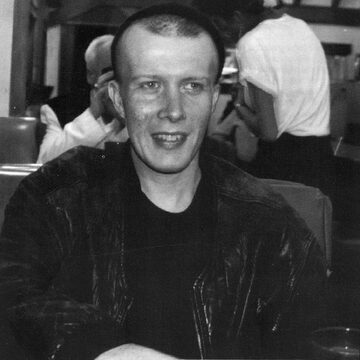 Simon Mckenzie Dwyer was a curious fellow. A pub brawler and a football hooligan. A Plymouth Argyle supporter with a tender soul and ferocious intellect. Raised a Catholic, abused and beaten by Christian brothers, he grew up feeling anger, guilt and shame but found David Bowie and a way out. I first met him when I was 17 and an understudy at Chichester Festival Theatre. I had just bought a red dress and he was stage crew watching the rehearsals. He saw me and said “I’m going to marry that girl in red.” I grew up in a small village in West Sussex, sheltered and naïve. I followed him to a squat in an enormous council estate in Poplar, East London. He started a fanzine in the late 70s called ‘Rapid Eye Movement’ and I was introduced to his friends who were musicians, writers, poets, performance artists and one glorious heroin addicted painter called Nicky Slagg who lived in the underbelly of a derelict Wapping warehouse. I remember stapling the fanzine pages together. The music magazine Sounds picked up on Simon’s interview with Crass who had refused interviews with the mainstream press. Like so many others, Crass co-founder Penny Rimbaud respected Simon and agreed that Sounds could re-print the article. Sounds then employed Simon as a music journalist. Much to my excitement he reported on Adam and the Ants and all the punk bands. He also went on a Belgium tour with The Cure, but his passion was for sub culture and his own philosophies on life and increasingly death. He poured his heartfelt ideas into his own Rapid Eye project and always ahead of the game he began to amass a following, some less savoury than others. Years after his death I found a letter that was postmarked Waco, Texas – a rambling missive from David Koresh. In the late 80s he started to feel unwell, lost weight and developed strange rashes. He took a HIV test in a private hidden clinic in London. The results were ‘unequivocal’ and we knew what that meant. He was officially diagnosed in 1992 and placed in the wonderful care of Dr Martin Fisher. He continued with Rapid Eye and writing for different projects with Genesis P-Orridge. Gen had been a dear friend for many years and felt the loss of Simon very deeply. Derek Jarman and Gilbert and George also supported him when his health began to deteriorate. Simon had several admissions to the rather grim Ward 6 in Hove (now a block of luxury flats – I wonder if the owners know the history). He was pumped full of toxic agents that were well intentioned and supposedly maintaining his CD4 count and reducing the viral load, but they had horrendous side effects. He had one drug that induced psychotic episodes during which he’d ask me to leave the house and hide the knives because he feared he might “butcher the cats.” At this point, for my safety, he was admitted to the amazingly beautiful Sussex Beacon where he decided to stop taking the drugs. He spent the last six months of his life there. The staff there were angels, always loving and kind. Simon used to smoke at least 40 Dunhill International a day and made so many burn holes in his bedding that they had a special rotating set of sheets and duvet covers for him. He fell into a loving, cherished morphine induced slumber. The last time he woke up, he asked me for a fag which I held to his lips. He savoured two drags and then slept gracefully. A few days later he died in my arms, clean and fresh and sweet as a daisy. When the doctor, Jonathan Wastie, came in to certify the death he kissed Simon on the forehead and said “farewell darling.” I said “sail safe dearest with Peter our son who was born sleeping in this world but reaching out to embrace you in the next.” Words by Fiona Dwyer Obituary written by Paul Cecil for The Independent – published 28 October 1997. Simon McKenzie Dwyer, writer and editor: born Salisbury, Rhodesia 28 November 1959; married 1982 Fiona Pritchard (one son deceased); died Brighton, East Sussex 26 September 1997. Simon was an extraordinary young man who established himself as one of the leading commentators and contributors to, the artistic and creative subculture of the last two decades. A writer first and foremost, he focused his work through the magazine he first conceived in 1979 and named Rapid Eye. The youngest of three sons, Dwyer was born in Salisbury, Rhodesia, in 1959 but moved to England a year later, when his family returned, moving around the country before settling in Plymouth, where Dwyer attended, somewhat reluctantly, the local schools. He left Tavistock Comprehensive shortly after his 16th birthday. This was the time of punk which turned many heads away from convention and towards the exploration of the alternative and improbable. It was precisely into this area of burgeoning cultural expansion that Dwyer focused his energies. His understanding of the possibilities awakened by rejecting hierarchical and formal society was already gestating, as was his willingness to embrace the art and performance of transgression. In 1978 he moved to London and began, in the tradition of punk writers, developing his own fanzine, Rapid Eye. The first issue which hit the streets in 1979, included a feature article on anarchist band Crass which was quickly picked up by the music paper Sounds. Dwyer established himself rapidly as a regular contributor to Sounds, interviewing the famous, the soon to be famous, and – as is inevitable in an industry that so vicariously promotes and demotes – the once famous and the never will be famous. This eclectic mix served mainly to reinforce in Dwyer the belief that status is the least relevant concerns and that it is the human level, and creative integrity, that above all marks out the true artist. By 1982 Dwyer had moved to Brighton, and it was in that year that he married Fiona Pritchard. It was soon after this that sadness struck their lives, with the death at birth of their only child, Peter. The world of commercial journalism became ever less attractive to Dwyer and he moved from it to that of interior design, joining Rhodec International. Alongside this work, he continued writing, developing Rapid Eye into an increasingly lavish exemplar of fanzine art. Indeed, the famous “Black” edition which he produced in 1986 has since become a sought-after collector’s item. However Rapid Eye as a concept, despite its plaudits, had for him never reached its potential. Calling in favours from friends and contacts he had made through his earlier work, he set out to produce the ‘zine to end all ‘zines: a coffee table edition, massive in scope, scale and vision. And how those favours rolled in: Andy Warhol provided the frontispiece; William Burroughs sent three pieces of writing, “And His Name was Rover”, “The Johnson Family” and the “Fall of Art”. Kathy Acker, Genesis P-Orridge and Colin Wilson also contributed to the volume, as did Derek Jarman. Alongside this galaxy of stars, Dwyer included, with no less care or column inches, a raft of unknown writers with specialisms ranging from conspiracy theories to foot-binding. Over a year in the making, Rapid Eye 1 (1989) proved to be inspirational, in the words of the New Musical Express “a veritable treasure-trove of mind-activating information. Penetrating, comprehensive, most illuminating.” With the task of the first “real” issue behind him, Dwyer and his wife transported their life to America. They were there to develop Rhodec’s North American presence, but inevitably spent the best part of their year travelling across country. It was this, certainly, that provided the inspiration for Dwyer’s greatest exploration of his journalistic skill, a text of 100,00 words, “The Plague Yard: Altered States of America”. It was on their return to England in 1991 that Dwyer learned that he was HIV positive. While coming to terms with the diagnosis he completed “Plague Yard” and concluded a commercial deal with Creation Books for Rapid Eye. The idea of publishing “Plague Yard” as a book was floated. Those who read the text found it astonishing: the art of the travel writer re-configured into a plea for cultural freedom, with the punk aesthetic not only intact, but validated as never before. Focusing as much on low art as high, the piece shows Dwyer to be much at home with the disposed idealist as with the art-elite glitterati. But Dwyer for all the praise heaped on him, remained true to the spirit that had long driven him, and declined the offers. “Plague Yard” was not to be used to announce his elevation in the literary field, instead it was to exist, and stand or fall on its merits, alongside many other pieces, simply as a contribution to Rapid Eye 2. By 1993 the debilitating effects of HIV were becoming an unavoidable presence in his life. Minor ailments mounted up, fatigue set in, and work began on the third and final volume of Rapid Eye. The centrepiece of the volume is a startling piece, by Dwyer himself, on the art of Gilbert and George who offered the use of their painting “We” as the cover. Rapid Eye 3 was launched in London in 1994.
 -
 Leaflet containing information about how to access HIV peer support, including how access mentorship, becoming a mentor and general information about The Sussex Beacon
 -
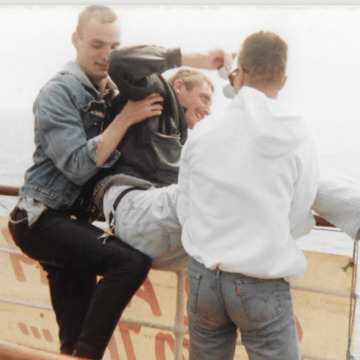 Ken was a good friend who I called the gentle giant. He was very gifted and loved gardening. He made a small water fountain for his balcony and created a flower garden around the summer house at The Sussex Beacon when it first opened. He also unveiled the first AIDS Memorial in 1996 which can still be seen at the base of a silver birch tree adjacent to the entrance doors of the Brighthelm Centre. His hands were deformed by the Arthritis he'd had for many years. When he requested an operation to straighten them, he was shockingly told that it wasn't worthwhile because of his AIDS diagnosis which hurt him deeply. A few years later he contributed an article about himself titled ‘I’m Still Here’ which was on the front page of the Sussex Beacon newsletter. He was always very out about his status even in those days when so much stigma was around, and he created his own support. One late afternoon I was ‘kidnapped’ by Ken and six others when buying a tin of Whiskas. Open Door had been given eight tickets for an Elton John concert at Earls Court. The boyz picked me up and carried me to a waiting Bedford minibus and off we went. I arrived bursting for the loo, but WOW, what a night it was. We had fantastic seats with wheelchair access. I still miss Ken because we had so many good times together. I was completely gutted when he crossed the Rainbow Bridge.