Reflections on my work experience in the Queer Heritage South Archive
12th August 2026
During my time at Marlborough Productions I was shown how to digitize their collections for their archive: Queer Heritage South. The archive is a collection of personal media comprising of photos of flyers, posters, newspaper clippings which have been donated by the local queer community and has been set up to share and celebrate this important local history. There are many areas of the archive which if someone has a lot of media from a time in their lives they can create a collection and I specifically worked on the Brighton Cares collection contributed by Allan Cardew.
I was shown how to use a scanner and upload JPEG images. These were then input into Omeka, a program which supports their website. Each document needed extensive information attached to its page which included the descriptions, dates, publishers and rights holders. If this information was not immediately identifiable I had to research it. This information will help people research and learn more about local history.
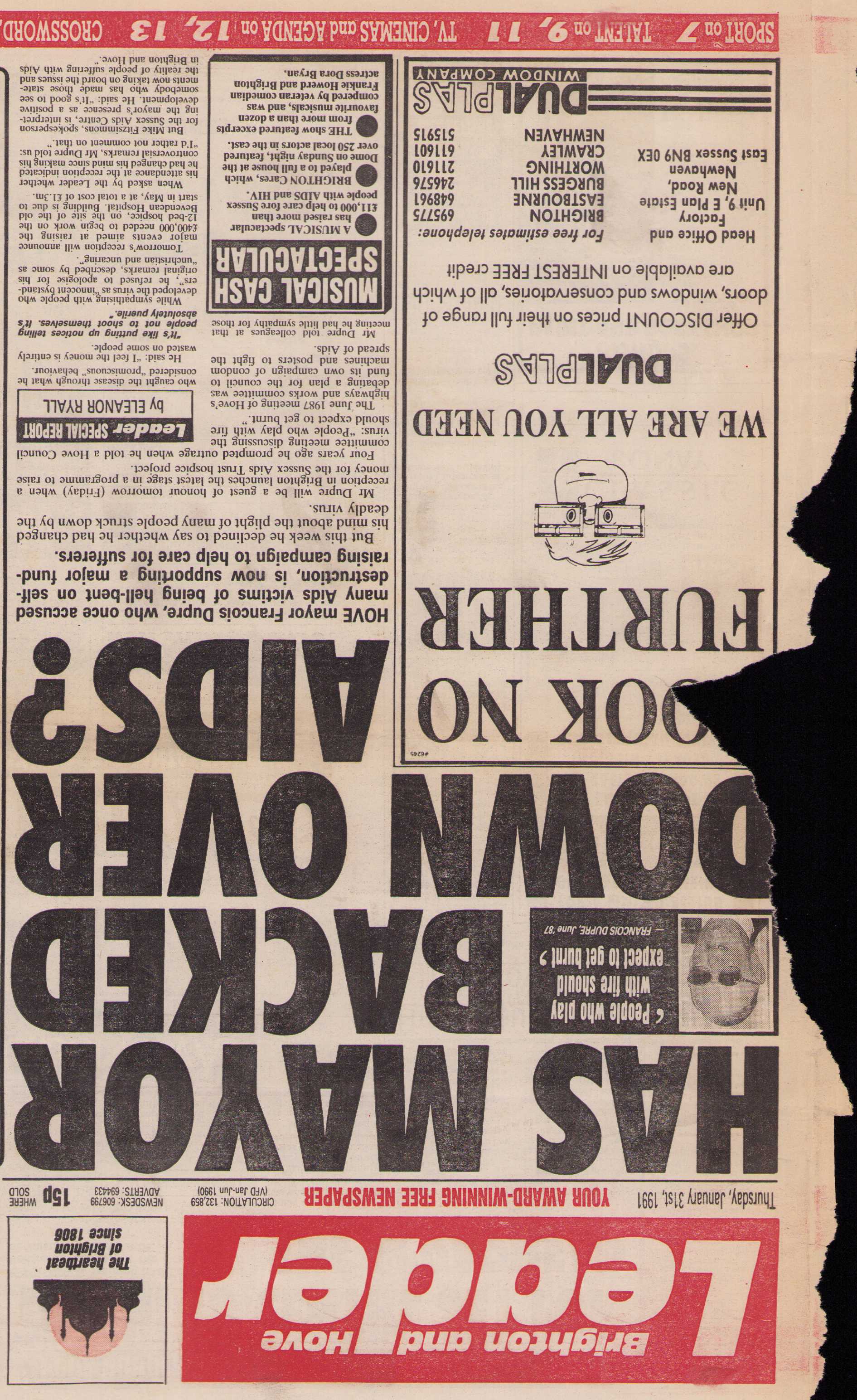
The piece I found most interesting was a newspaper clipping from the Brighton and Hove Leader in 1991.

Front page of Brighton & Hove Leader, January 31st 1991
The article included how Hove Mayor Francois Dupre who once accused many AIDS victims of being hell-bent is now supporting a major funding campaign (the Sussex AIDS Hospice Trust, now known as the Sussex Beacon). Out of all of the pieces I found this to have the most provocative headline. I was surprised by how aggressive the newspapers were allowed to be. This really shows to me how the press approached topics like HIV/AIDS in the early 90s.

Advertising image for Life Before Pride. Image credits: Abigail Dombey
I also helped by shadowing an event: Life Before Pride: Prejudice, Protests, and Picnics at Ironworks in Brighton. The speakers were Kate Wildblood and Abigail Dombey as they reflected on queer life in Brighton during the 80s and 90s. I helped organise the event space and take tickets at the door. During the event, they showed a number of images that were taken by Abigail at the time and showed early protest, signs and t-shirts and how community came together in the local area to stand up against Section 28. I was particularly moved by the images and how people came together in a time of such hate. Also about how the audience was filled with the people in the images and how they all reflected together on their youth.
I feel the work that Marlborough Productions and Queer Heritage South do are so important for the LGBTQ+ community and felt really welcome and discovered a lot about queer local history.